

Note: This article was originally written in Japanese and translated into English. Some nuances may differ from the original text.
TL;DR
- The threat of neglected external IDs: It is difficult to keep track of resignations and transfers among external partners. Their unused IDs are prone to remaining in systems as “zombie IDs,” leading to potential data breaches.
- The limits of centralized management: With companies manually processing as many as 30,000 manual ID checks and updates per year, per company or corporate group, centralized management by headquarters IT departments has reached its breaking point.
- A solution that reduces operational workload by 70% in one customer’s case: By using Tactna to delegate administrative authority to the partner’s organization (an autonomous decentralized approach—self-governing, with authority distributed to partners), companies can dramatically reduce operational costs while maintaining security.
- Preparing for the future: In the coming era where AI agents, alongside humans, will participate in corporate activities, an autonomous decentralized Identity and Access Management (IAM) infrastructure will be indispensable.
Introduction
In B2B business, it has become commonplace to streamline operations by granting external partners—such as sales agents, resellers, and distributors—access to internal systems.
However, are you aware of the critical security risk lurking behind this convenience: the neglected IDs of former employees? In this post, we will explore the “zombie ID” problem that plagues many companies and explain a next-generation approach to identity management that solves it at the root.
1. What Is a “Zombie ID”? And Why Do They Occur?
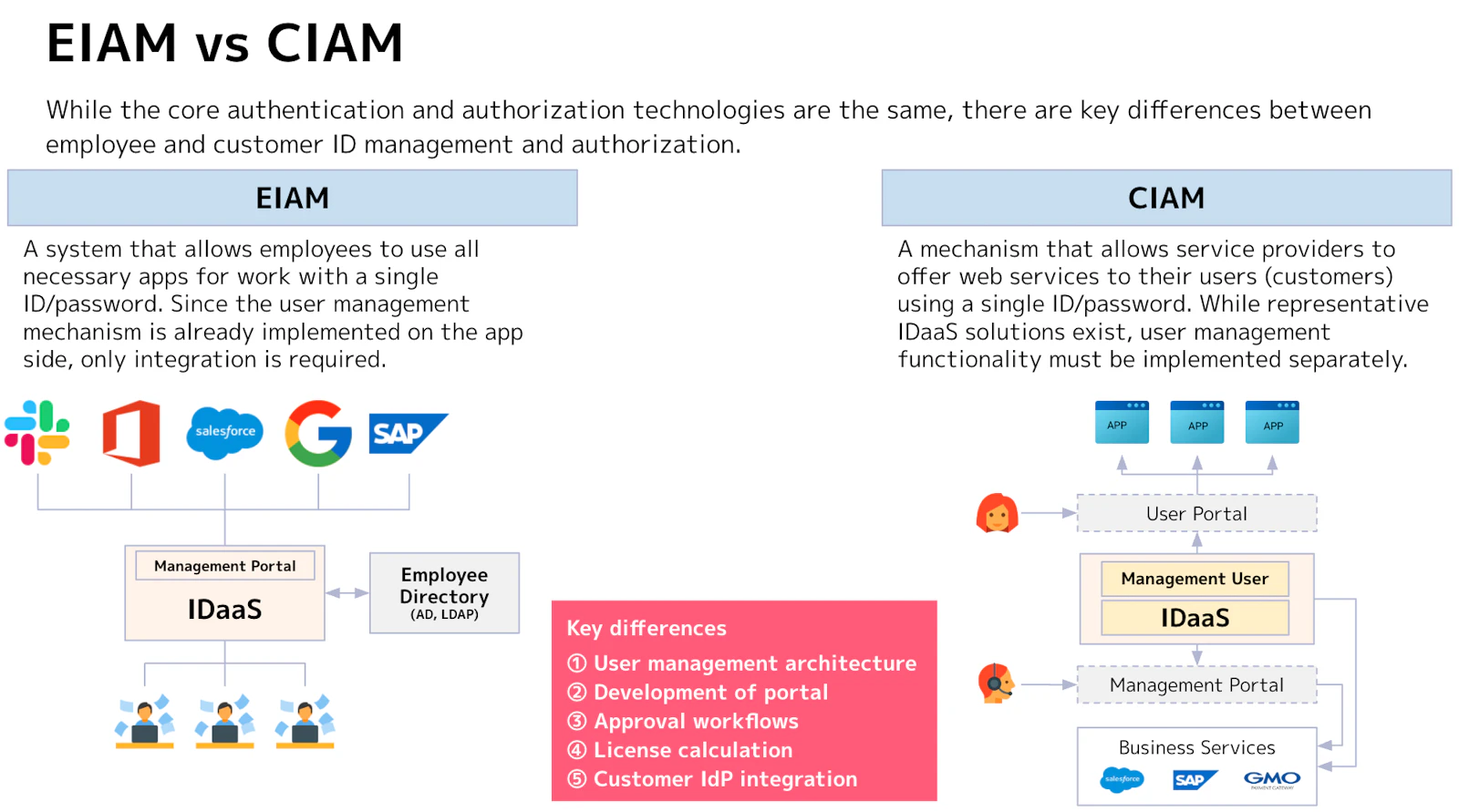
For internal employees, it is possible to instantly revoke system access upon resignation or transfer by syncing with HR systems and central directories such as LDAP.
However, systems used by external partners are a different story. There is no real-time way to know when a partner’s representative leaves or changes roles. As a result, unused IDs remain active and capable of accessing your systems for extended periods.
These are “zombie IDs,” and they can lead to data breaches and serious security incidents.
2. 30,000 Inventory Checks a Year: The Limits of “Centralized Management” by IT
To prevent zombie IDs, many companies conduct regular “ID inventories” (access reviews). However, the operational cost of this process is far from negligible.
According to one survey, companies process about 30,000 manual tasks annually (per company or corporate group) just to add, remove, or audit external IDs.
This leads to endless inquiries for every system—“Is this person still with your company?”—causing operational workloads to spiral out of control.
Until now, the mainstream approach has been for the IT department to hold all information and issue and manage IDs centrally. But centrally managing such a massive volume of external users has reached its limits. The very tasks designed to ensure security have become a severe pain point for frontline teams.
3. How a Major Manufacturer Achieved a “70% Reduction in Operational Workload”
One major manufacturing company dramatically solved this monumental operational challenge by implementing Tactna.
Instead of the traditional method where system administrators centrally manage everything, the solution Tactna provided was an autonomous decentralized approach: “Let the partner’s own organization, which knows its people’s status (resignations, transfers, etc.) best, manage their IDs.”
Specifically, they built a mechanism (a self-service portal) with the following features:
- Automatic lockout via password expiration: Passwords are automatically locked after a set period, such as 90 days, forcing a halt in usage.
- Delegation of authority: The authority to unlock suspended IDs or invite new team members is delegated to the partner’s team administrator, rather than the internal IT administrator.
- Maintaining complete audit logs (System of Record): Records of “who did what, and to what” are reliably stored on Tactna’s side as a System of Record, so everything can be audited afterward.
Dramatic Results from Implementation
At this company, it was estimated that approximately 30% of all accounts were potentially unnecessary “zombie IDs.” By adopting Tactna’s system, they effectively reduced these latent zombie IDs. Furthermore, by entrusting ID management to business partners like distributors themselves, they successfully cut operational workload by 70%.
■ Read the Full Case Study
We have published a detailed case study on this major manufacturer’s initiative to “reduce operational workload by 70%” and “reduce latent unnecessary IDs (zombie IDs).” It covers the background of the implementation and how frontline challenges were resolved. If you are struggling with external partner ID management, please take a look.
Read the full case study (Tactna official website)
4. Conclusion: Building an “Autonomous Decentralized” Infrastructure for the AI Era
What Tactna aims to be is not just an authentication system. It is a core infrastructure for an autonomous decentralized society that combines four elements: “Who is doing what (Identity),” “Who authorized it (Delegation),” “Who is responsible (Responsibility),” and “Records that can be verified later (Audit).”
In the future, we will undoubtedly see an era where not only humans but also “AI agents” join systems as partners in corporate activities. When that time comes, centralized management will break down.
The goal is not to eliminate management, but to create a system that “delegates authority and responsibility to the front lines while maintaining overall audit logs.” This is the powerful foundation needed to scale corporate activities without increasing future operational burdens.
Are the IDs of people who left or changed roles long ago still active in your systems?
If you are facing challenges with external partner ID management and operational costs, please consider Tactna’s “Autonomous Decentralized Identity Management.”