What is the business goal of implementing a unified ID infrastructure?
目次
Why Do We Need a Unified ID Infrastructure?
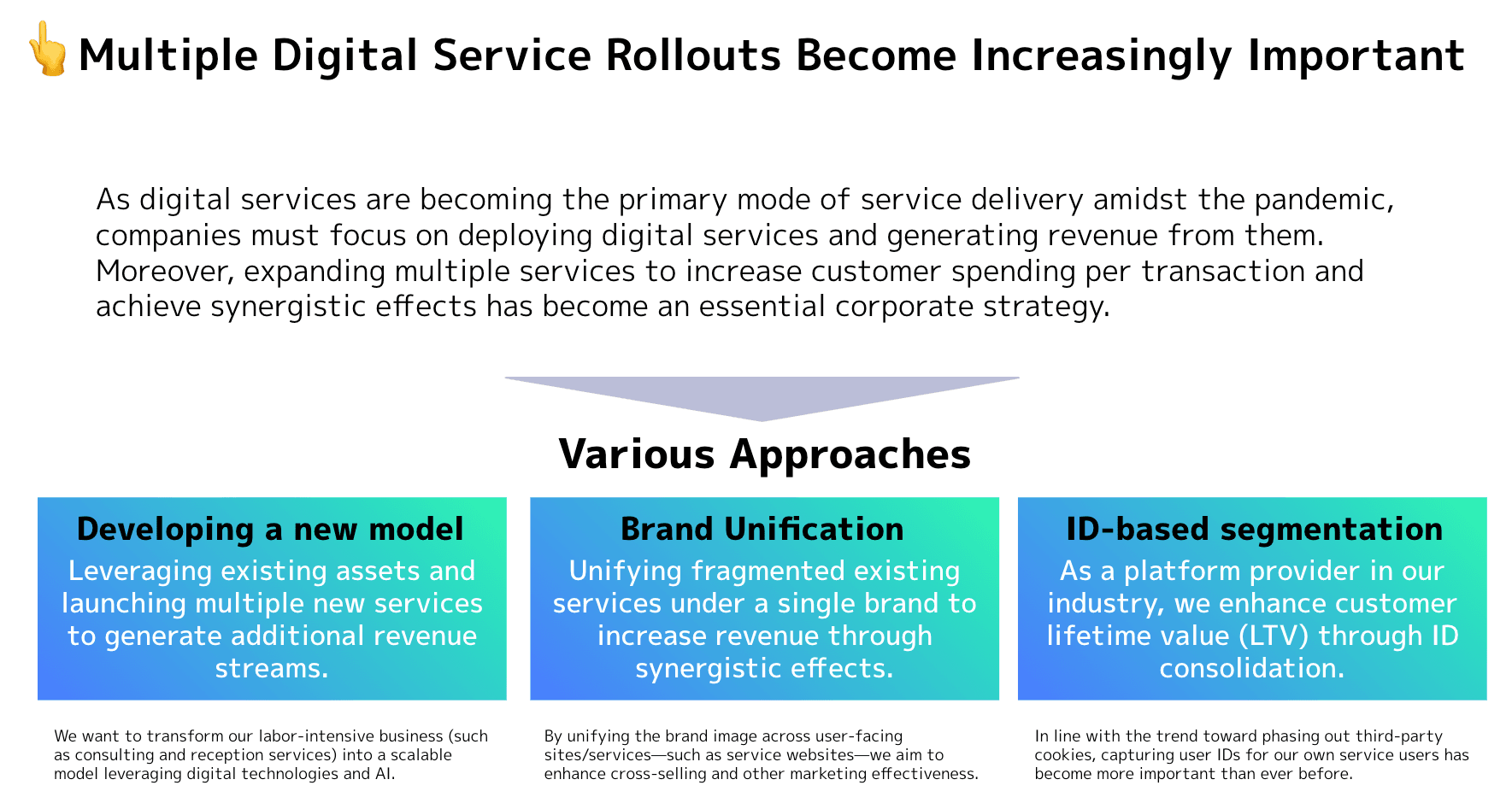
Many companies are increasingly turning to digital service deployment as a means to boost revenue. Sparked by the COVID-19 pandemic, communication has shifted from face-to-face to online-first models, while hybrid online/offline communication has become the norm (often referred to as OMO: Online-merges-offline).
When using services accessed via smartphones or computers, users inevitably perform actions like user registration and login. Additionally, even in physical store visits, customers may present membership cards or other identification.
In this way, IDs serve as crucial factors for understanding consumer behavior across both online and offline channels. Put differently, companies need to establish a unified ID infrastructure and provide ID services to their users. Now, let's examine more specifically the purposes behind implementing such an ID system.
1. Unique identification of users for data utilization
Larger companies typically possess various resources when developing digital services and are exploring scalable business models through digitalization. As they expand their service portfolio, accurately identifying specific users becomes increasingly important. Below are some key benefits from two distinct perspectives.
This perspective is particularly significant from the service provider's viewpoint. The expected effects include:
- Data analysis: Enables trend analysis of purchasing behavior by user demographic. This facilitates new service development planning and related initiatives.
- Marketing optimization: Allows clear identification of which marketing strategies effectively convert potential customers into paying ones.
2. Unifying brand experiences and leveraging them as monetization drivers for cross-selling
When offering multiple services, creating a consistent brand image across services can effectively encourage cross-selling. Some companies provide integrated suites of products—for example, Microsoft Office 365 combines various services including Outlook (email) and Teams (chat/video conferencing), all presented under a unified brand identity with straightforward account creation and login experiences. Once an account is established, users can access appropriate services based on their permissions.
Even when offering multiple services with different target personas rather than integrated suites like Office 365, it's preferable to maintain consistent brand experiences for user management functions (such as profile editing and service usage tracking). Having a single interface that bridges different services can significantly enhance cross-selling opportunities.
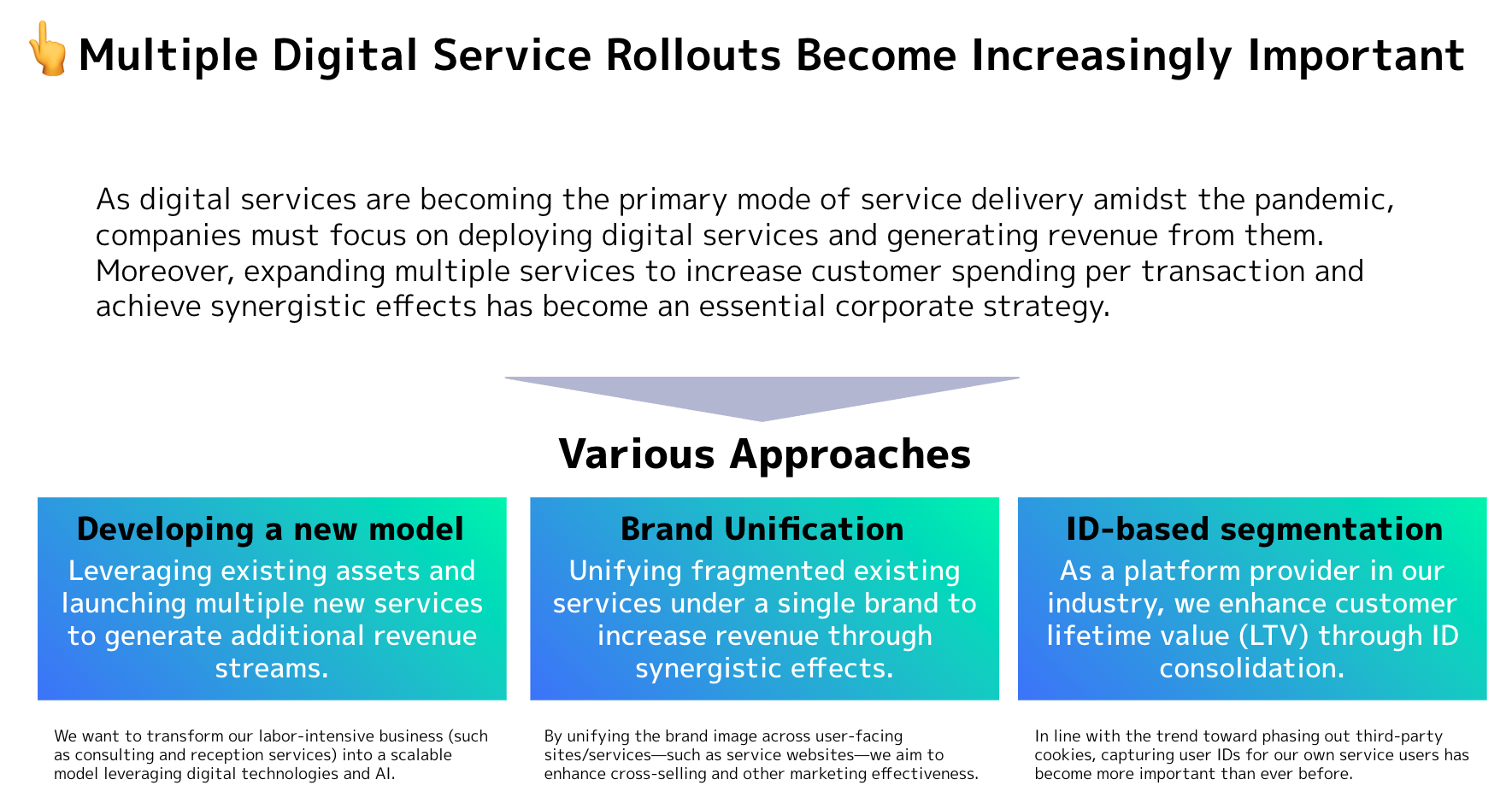
To summarize the key points as below.
Key Implementation Considerations
As discussed above, implementing an ID foundation first is essential to achieve business benefits like data-driven digital marketing and cross-selling drivers. What key considerations should you keep in mind when implementing an ID foundation? We'll provide detailed explanations in the next blog post, but for now, here's an overview of the most important points:
- Verify the timeline for your digital service deployment plan
- Assess whether any existing services need to be migrated
- Understand the service delivery model and contract structures
- Clarify the responsibility boundaries for user attribute data
- Design the application onboarding process
In addition to business-level organization, having technical expertise provide hands-on support during the ID foundation implementation process can help streamline projects with minimal effort.
.png&w=3840&q=75)